Flat roof repairs in summer: what we check and why heat damage is often invisible from below
Most flat roof failures start at the top and only reach the ceiling months later. By the time you see a damp patch, the surface has usually been compromised for a season.
That gap between cause and symptom is what makes flat roofs awkward. You can be looking at a roof that is already failing and see nothing obviously wrong from street level. Summer makes this worse, not better. Heat accelerates the damage while making the surface look dry and intact.
This post explains what actually happens to a flat roof in summer, what we look for when we inspect one, and how we decide whether a patch or a full replacement is the honest answer.
Why flat roofs fail in summer specifically
Heat is not kind to a flat roof. Several things happen during a sustained warm spell, and they tend to compound each other.
UV degradation works slowly but continuously. Ultraviolet light breaks down the surface layer of a flat roof over time, making it brittle and less resistant to water. You cannot see this from below. The surface may look intact from a ladder glance, but close inspection will show cracking, crazing, or a chalky texture that tells you the waterproofing layer is losing its integrity. A summer of strong sun accelerates this process considerably.
Thermal expansion is a less obvious problem. A flat roof surface heats up significantly during the day, sometimes reaching temperatures well above ambient air temperature. It then cools overnight. That daily cycle of expansion and contraction puts repeated stress on seams, joints, and the points where the surface meets upstands, edge trims, and flashings. Over years, those stress points open up. Water finds the gaps.
Ponding and residue compound the problem. Flat roofs are designed with falls to drain water away, but those falls can become compromised over time as the substrate settles or the surface loses its shape. Water that sits on the roof during summer rain does not always evaporate cleanly. It leaves behind mineral deposits and debris that sit in the low points, holding moisture against the surface and accelerating deterioration. In a wet summer this becomes a cycle that does real damage to the waterproofing layer.
The result is a roof that can look reasonable from below while being significantly compromised above. By the time a damp patch appears on your kitchen ceiling or the plasterboard in your garage starts to stain, the surface has usually been failing for months, sometimes longer.
What we check on a flat roof survey
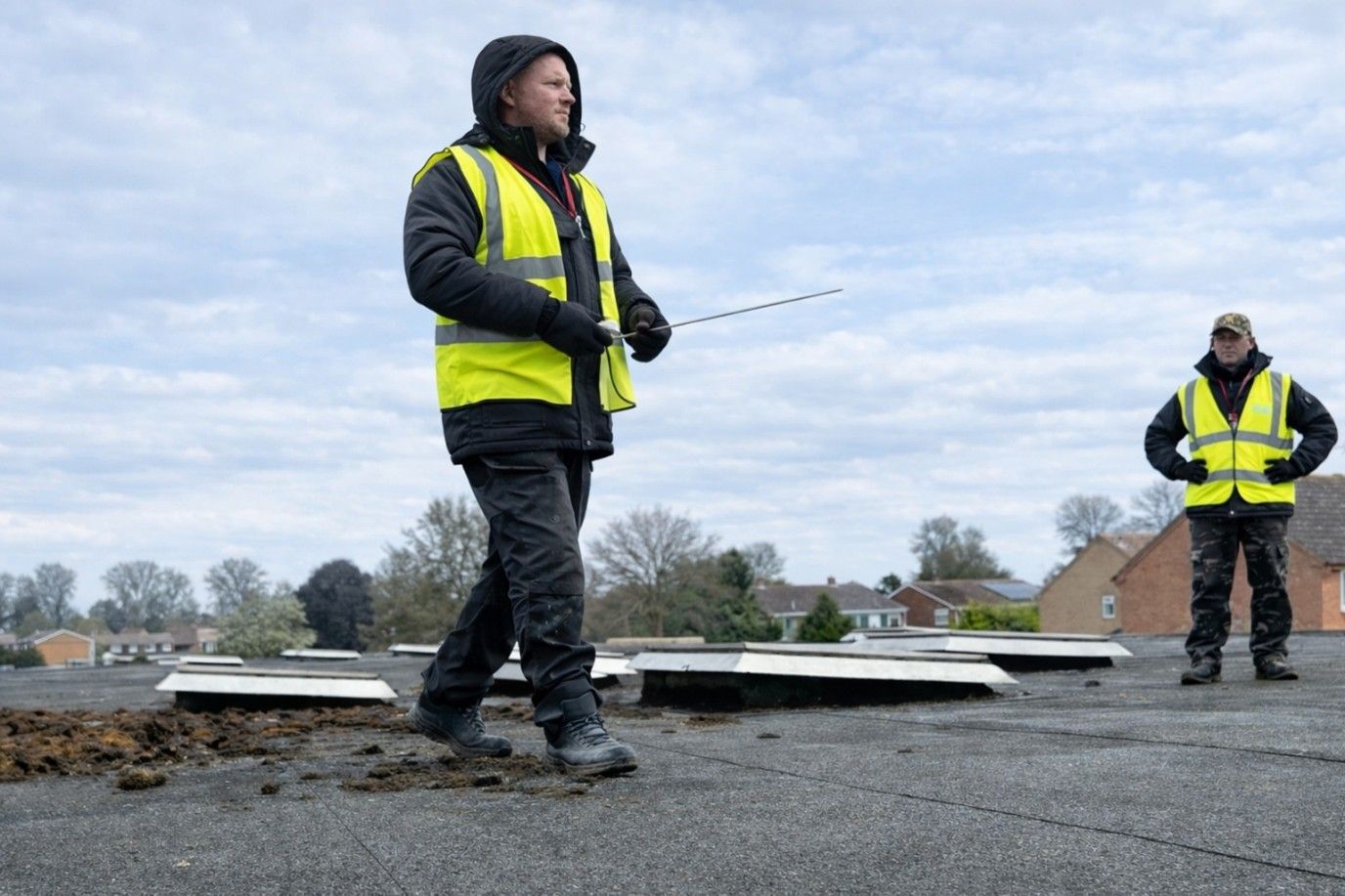
A proper flat roof inspection is methodical. We work across the whole surface, not just the area directly above a reported problem. Flat roof water ingress frequently travels before it drops, so the entry point is often not directly above the damp patch.
Surface condition is the starting point. We look at the overall texture and appearance of the waterproofing layer, checking for cracking, crazing, blistering, or areas where the surface has lifted. Blistering is common in summer: air or moisture trapped beneath the surface expands in the heat and creates bubbles. Some blisters are superficial. Others indicate delamination of the surface from the substrate below.
Seam integrity is checked carefully. Seams and laps are the most common entry points for water. Heat cycling opens them over time. We check that every seam is bonded, that there is no lifting at the edges, and that the lap widths are adequate.
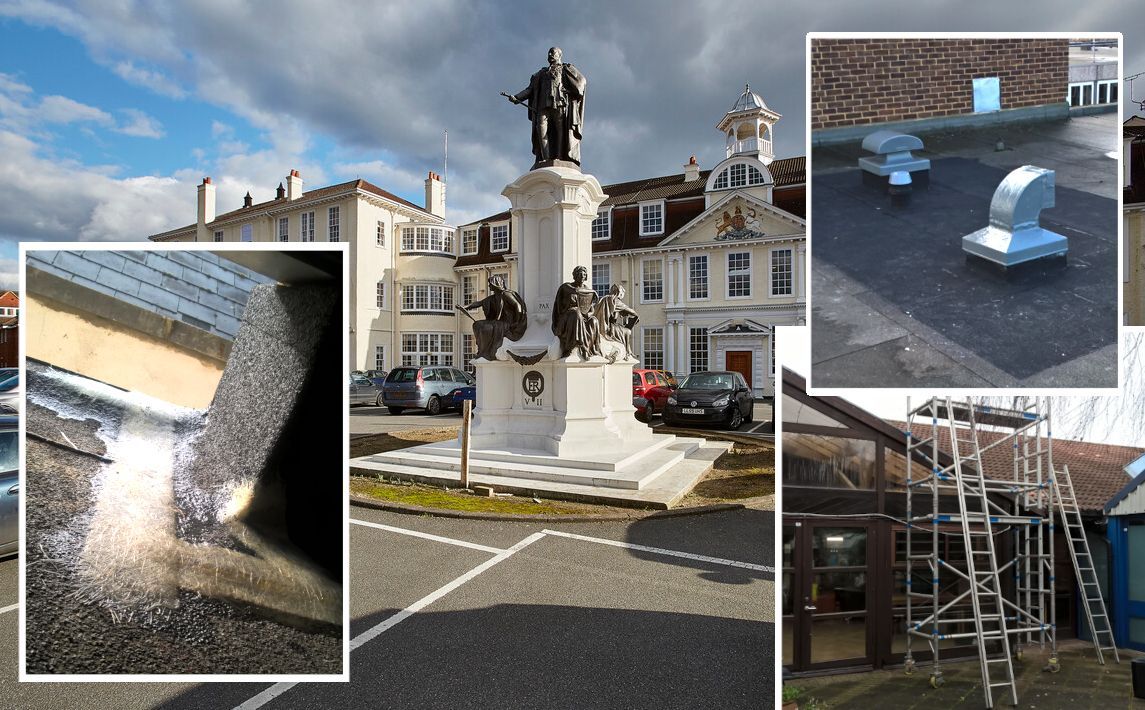
Edge trims and upstands get close attention. The junction between the flat roof surface and any vertical element, whether that is a parapet wall, a raised edge trim, or the base of a chimney, is a high-risk area. The surface has to turn up and bond to something solid. If that bond fails, or if the trim itself has corroded or pulled away, water gets in at the perimeter.
Outlets and drainage are inspected for blockage and condition. A blocked outlet creates ponding. A corroded or poorly sealed outlet creates a direct water path into the roof structure.
Parapet flashings, where present, are checked for mortar condition, flashing continuity, and any signs of movement. A parapet flashing that has lifted even slightly can allow significant water ingress during heavy rain.
The substrate below the surface, where visible at edges or access points, tells us whether damage has already reached the structural layer. Soft or wet decking boards, staining on the underside of the deck, or visible rot are all signs that water has been getting in for some time.
This matters when deciding whether a patch will hold or whether the deck itself needs attention.
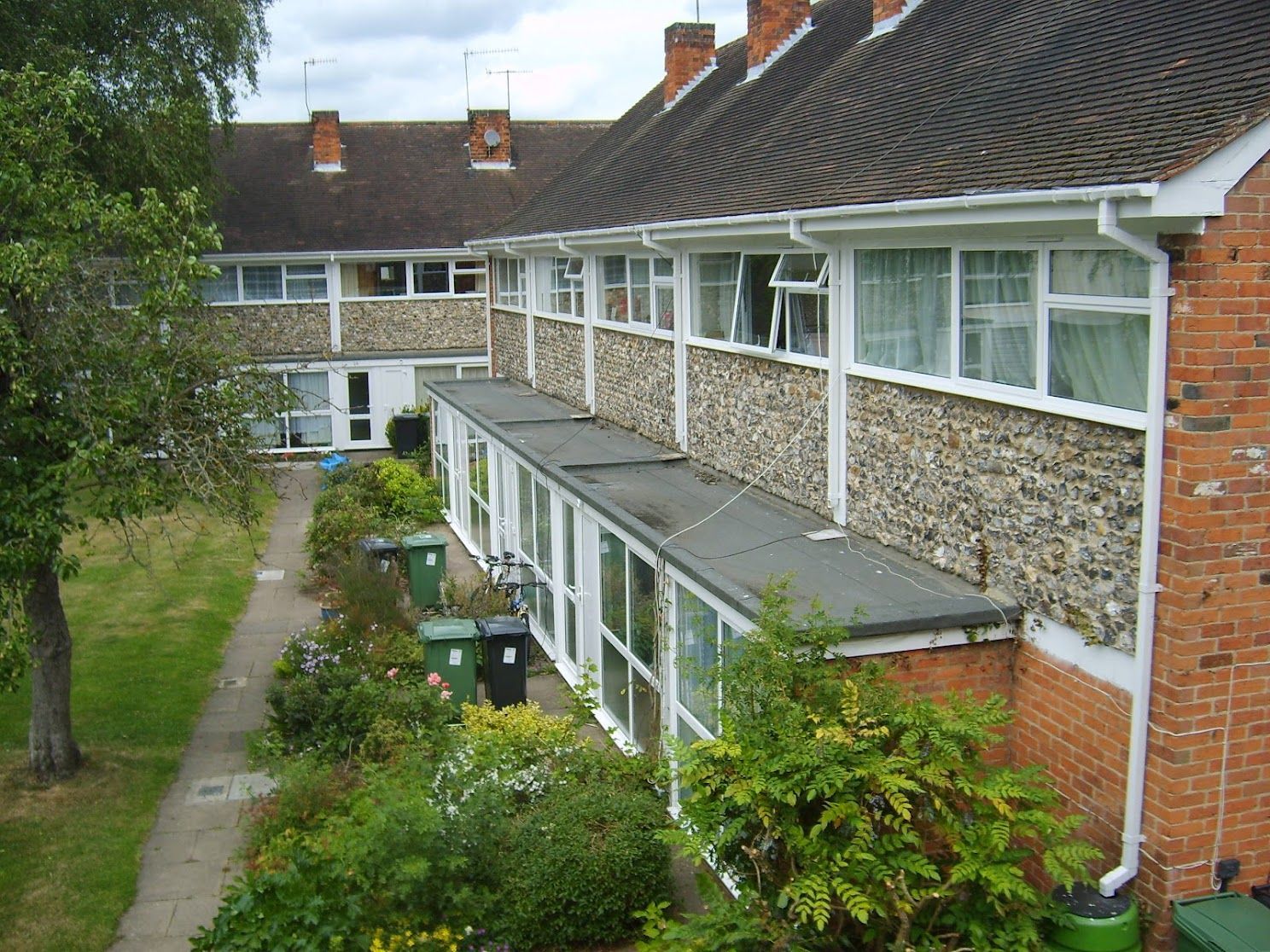
We cover all of this in a free photographic inspection report. Every finding is photographed and noted so you can see exactly what we have found, not just take our word for it. This is standard practice for us across the Thames Valley, whether we are looking at a 1960s extension in Reading or a kitchen roof on a period property in Henley-on-Thames.
When patching is the right call
Patching makes sense when the failure is localised and the rest of the surface is sound.
A single seam that has opened, a blistered area that has not delaminated the wider surface, an outlet seal that has failed, a flashing that has lifted at one point. These are all repairable without replacing the whole roof.
The condition of the surrounding surface matters here. If the surface around the damaged area is still flexible, bonded, and showing no signs of widespread UV breakdown, a well-executed repair will hold.
We are straightforward about this. If a patch is the right answer, we will tell you. We have been doing
roof repairs across this area for 40 years and we have no interest in selling a full replacement to someone who does not need one. A repair done properly is a good job. A repair done on a surface that is already failing across most of its area is money spent twice.
The honest position is that patching works well on a roof that has one problem in an otherwise sound surface. It does not work well as a repeated sticking plaster on a roof that is deteriorating generally.
When the whole roof needs replacing
Some roofs are past the point where targeted repairs will give you a reliable result.
Widespread surface failure is the clearest indicator. If cracking, crazing, or delamination covers most of the surface rather than one localised area, patching one section leaves the rest of the roof still failing. You will be back within a year or two with a new problem.
Ponding across the whole roof suggests that the falls have been compromised, often because the deck below has moved or deteriorated. Fixing the surface without addressing the falls means the water will continue to sit and continue to do damage. This is common on older garage roofs and extensions across the area, particularly those built in the 1960s and 1970s when flat roof construction methods were less refined.
Substrate damage changes the calculation significantly. If the decking boards below the waterproofing layer are soft, rotten, or structurally compromised, a new surface laid over them will not perform correctly. The deck needs to be right before the waterproofing goes down. When the substrate is damaged across a significant area, a full replacement is the only way to get a roof that will last.
Multiple past repairs on the same roof are a signal too. If a roof has been patched repeatedly and is still letting water in, the surface has reached the end of its serviceable life. The repairs are no longer keeping pace with the deterioration.
In these cases, a full replacement gives you a roof that will perform reliably for years rather than a series of repairs that each buy a little more time.